
The Last of the Real Queens Eccentrics
Rent Control in the Time of the Uzbeki Invasion

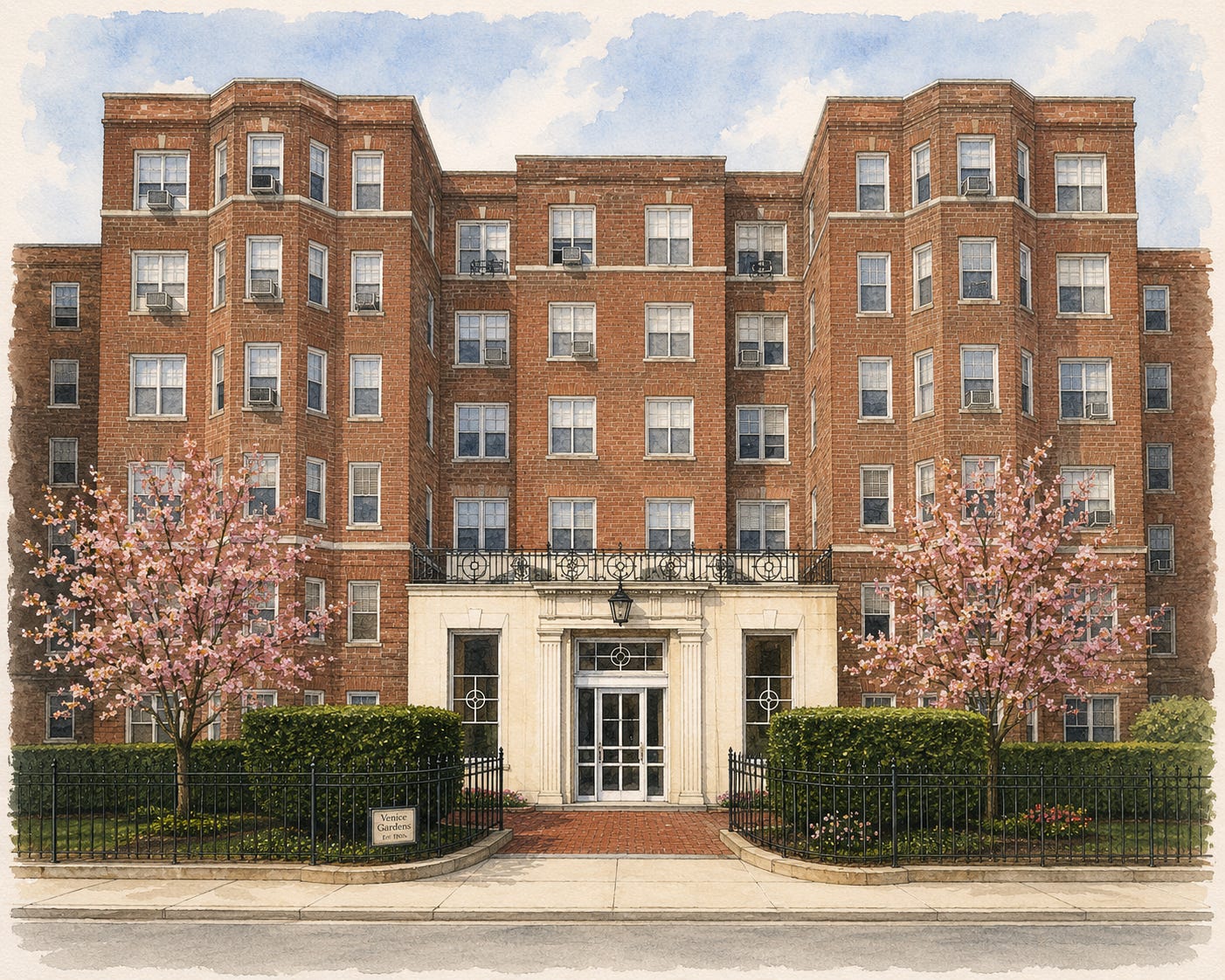
Once upon a time in the long-ago year 2006, when the world was green - or at least, a less disturbing shade of crazy – I lived in a city on the sea called New York. Nowadays, every square inch of New York is priced too high for people to live in, but back in those days people willing to pay $2500 for a 248-square foot studio apartment hadn’t colonized every inch of the city yet.
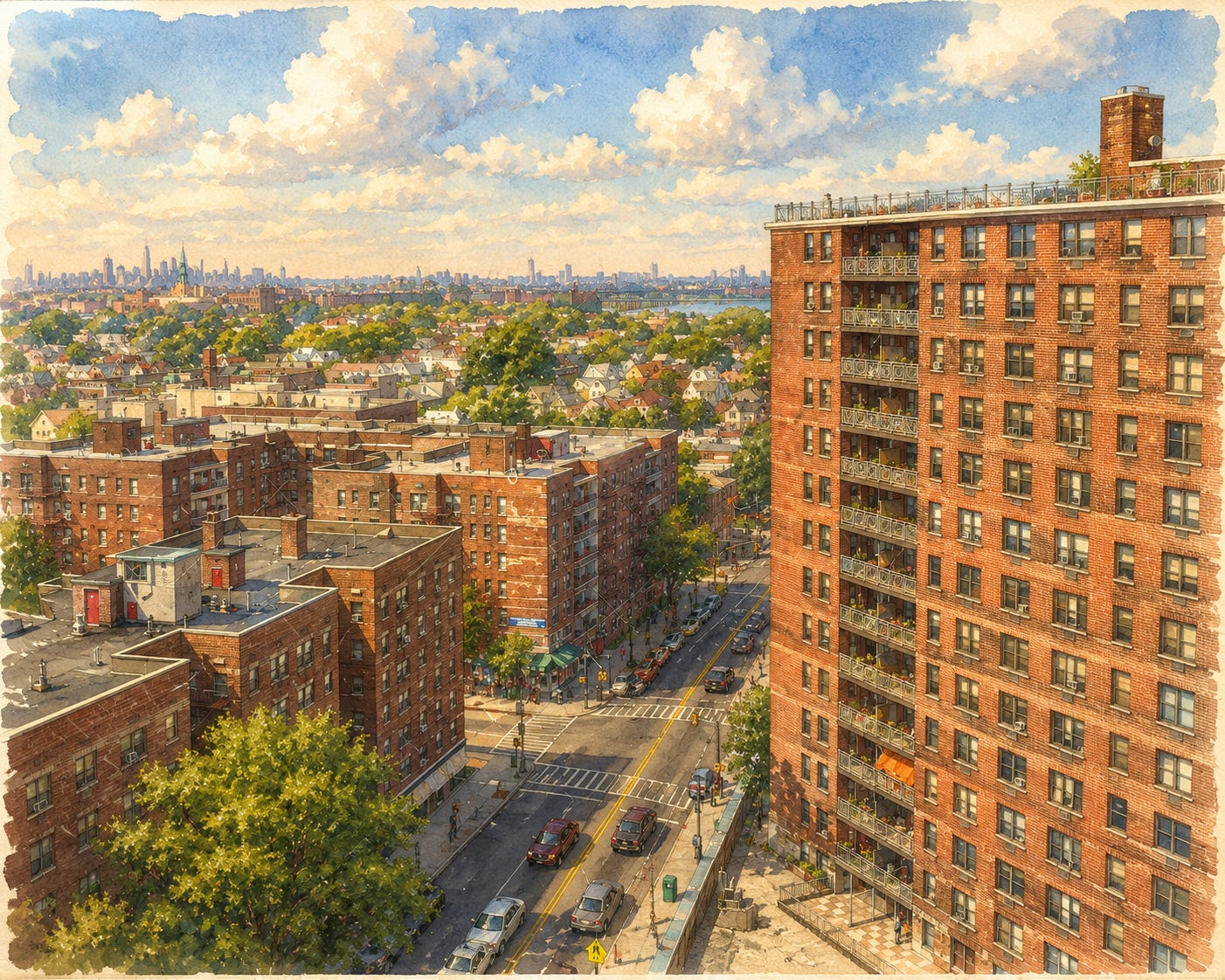
And so, I lived in a magical neighborhood in the middle of the borough of Queens, which these people pretended not to know even existed unless they were in a neighborhood a short subway ride from Manhattan.
It was in this magical land we call Queens that I lived in an enormous two-bedroom apartment that was rent-stabilized. I had grown up in that apartment. When I turned 21, I informed my parents that it was time for them to spread their wings and leave the nest. They bought a house out by the Long Island border, and I held on to what remains the greatest deal in the history of New York City rent.
The neighborhood was named Venice Gardens after the Very Nice Real Estate Corporation which developed the area in the early 1920s, transforming vast tracts of unattractive farmland and foul-smelling forest into city block after city block of beautiful squat brick buildings.
The buildings that lined the streets, while old and maintained to the varied degrees that their owners felt it necessary to invest money, were all built in a time when architects took a degree of pride in making even the humblest structure attractive.
Saturn’s Court, the courtyard building across the street, built in the 1920s, featured ornate window frontage and turrets perched on the corner rooftops, as if to say, “Yes, this building has no elevators, and yes the steam radiators will make your apartment in the winter time (a period defined as October through May) as hot and steamy and impossible to live in as the Darien Gap. But it is still your castle.”
My building, having been built in the 1930s right before World War II, had a far less ornate massing, but nevertheless it did have elevators. And like every apartment in Venice Gardens, it had giant twelve-foot ceilings, a sunken living room, and large windows that captured the afternoon sunlight. The Long Island Railroad was three blocks away, and on a quiet night you could hear the train in the distance speeding down the track, blowing its lonesome horn.
Even in the year 2006 most nights were quiet, this being the year before the opening of the tropical-themed nightclub on Queens Boulevard and the weekend drunken domestic disputes that subsequently played out up and down the street every weekend.
I was the building’s eccentric. In the 1980s, when I was a child, the neighborhood teemed with eccentrics. There was the insane old woman whom we’ll call “Harris” at one end of the hall, who kept watch on the floor’s comings and goings through her peephole. One February when I was young, my sister and I were tasked with throwing away the last Christmas tree our parents ever bought.
It had transformed from a festive decoration to a dead brown firetrap that the family had agreed, without speaking a word to each other, to never look at or acknowledge. If anyone had wanted to know who the last family in the building to toss our tree was, it would have been easy to do the detective work. We left a trail of dead pine needles from our door, to the elevator, out the back door, to the trash area.
The next day, I came home from pretending to go to school to find a crazy letter, in a shaky hand, threatening to murder our entire family for the crime of leaving a trail of pine needles down the hall. It was signed “The Management”, an attempt to pin a murder threat on our building’s landlord.
Harris was our number one suspect partly because everyone else on our floor worked for a living, and mostly because she had been put into an institution for a year for attempting to throw her mother out of her apartment window.

But that was the old version of the United States, when an eccentric could work even part-time and make the rent and live a comfortable life in a major city. In New York, in Los Angeles, in Austin, we’re living on the cultural and financial inheritance of a previous generation.
By 2006, I was the “character” of the building, which by this point had become the global center of Bukharian Jewish life. The Bukharians are a sect of Judaism that fled Uzbekistan, a former Soviet republic where, judging by my neighbors, the cultural heritage involved staring into the middle distance and also not talking to strangers.
My neighborhood, Venice Gardens, was home to every wave of immigrants that hit America’s rocky shores, and by the early 2000s had become the refuge for a generation of Bukharian Jews escaping oppression. By 2006 it had the highest concentration in the world, and every apartment in my building that wasn’t occupied by fellow rent control survivors was taken by an Uzbeki family.
They were fantastic neighbors. Nothing but quiet neighbors who followed the rules in a way that only people who do not want to be forcibly emigrated to the land of their birth will be. I would mostly see them in the halls bringing covered dishes to each other, and small talk was limited to the occasional elevator conversation about the weather.
One day, an old man was complaining about how cold new York gets in February, and I said, “Doesn’t it get colder than this where you’re from?”
And he replied, “Why do you think I moved here?”
I was the building’s eccentric.
They also carried just enough organized crime in their numbers that the streets, sleepy and suburban anyway, somehow even safer from petty crime. Although not from a Chinese burglary ring, which is another only-in-Queens story.
As I said, I had become the eccentric character in the building. Due to my lifestyle as a comedian, my neighbors would see me coming and going at all hours, falling down drunk sometimes day or night. I’d be coming in with different women, different friends, different roommates moving in and out at irregular intervals. Doing my grocery shopping at 2pm. Calling the locksmith in the middle of the night.
From their point of view, I was the guy you meet, or even avoid, in the halls, and ask your friends, your neighbors, and your group chat, “Who is that guy and how does he support himself?”
Then one day, one of my neighbors, a middle-aged Uzbeki lady, casually mentioned during elevator chit-chat that she had seen me on television. After that, the building’s attitude towards me became relaxed. Neighbors whose faces had been as cold and stoic as the edifice of Lenin’s tomb became marginally warmer, even hinting at notes of friendliness. Conversation became less forced. And I realized that I’d provided them with the one thing human beings desire about each other and rarely get: An explanation for the way they behave.
Free subscribers get twice-weekly stories, satirical essays, parodical ads, and comedy lists. Paid subscribers get all that plus a first draft look at Liam’s serialized comedy advice book, The Philosophy of Modern Standup.
Don’t forget to hit like (heart) button below, and leave a comment!