

Stand-up comedians travel constantly, which means my colleagues and I often function as early warning systems for problems in American travel. We tend to notice changes to frequent-flier programs first, and we discovered years ago that many discount travel sites were charging roughly the same rates as hotels. In 2015, while Donald Trump was still treated as a punchline in blue cities, road comics were reporting back that he was broadly popular everywhere else.
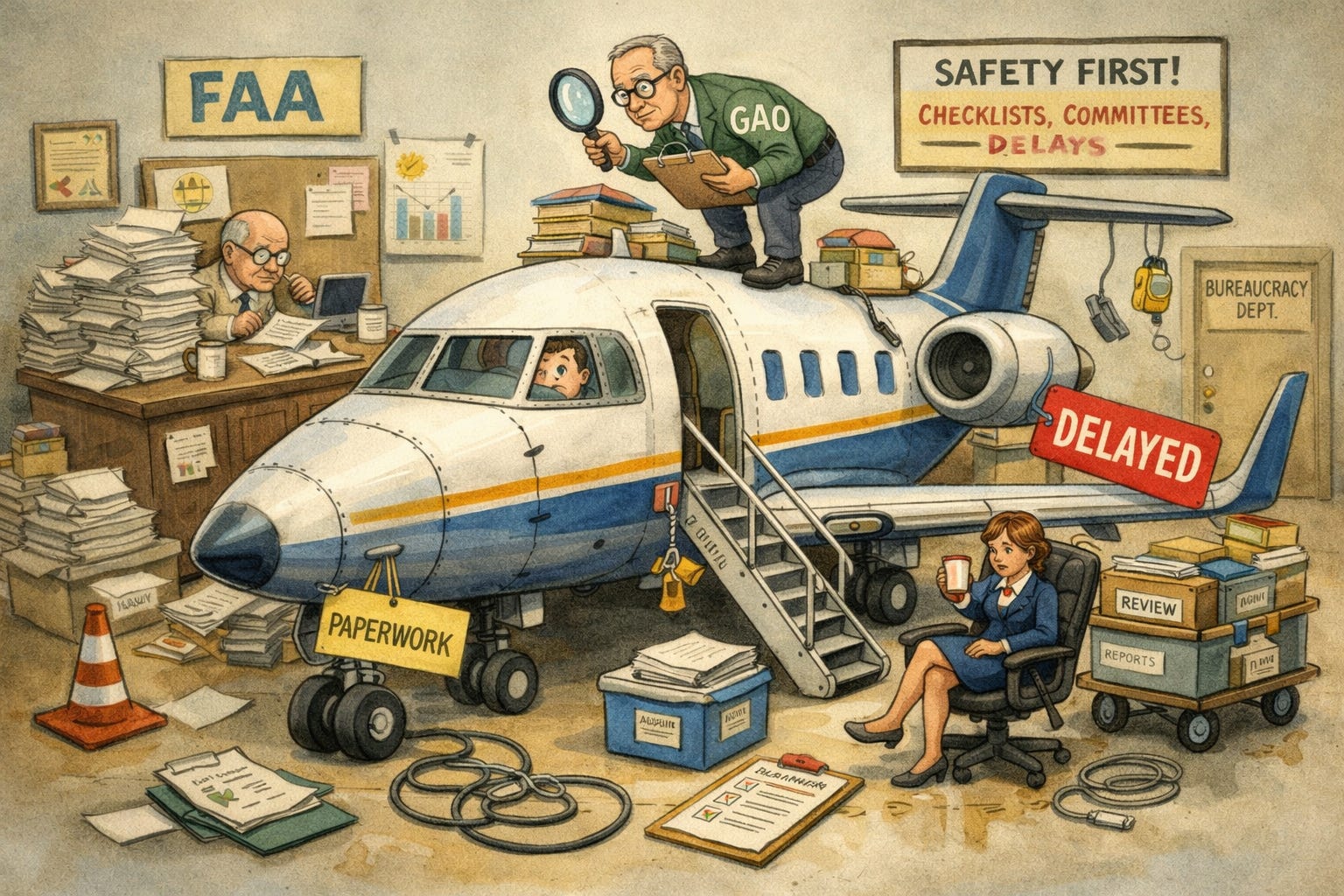
So if you suspect that air travel keeps getting worse, you’re not imagining it. The process for hiring FAA controllers lags significantly behind the demand for plane travel. It’s a system designed during the Cold War being applied in the Information Age.
On December 17, 2025, the U.S. Government Accountability Office reported that despite roughly 200,000 applicants over the past several years, the Federal Aviation Administration remains critically short of air traffic controllers with staffing down 6% over a decade even as flights increased 10%. This helps explain why you arrive at an airport and, checking the Arrivals board, find that your plane is running six hours behind, having apparently been routed through Mordor on its way from Miami to Atlanta.
Unfortunately, the solution isn’t as simple as posting an ad on LinkedIn. When a supermarket automates the checkout and fires 25% of their staff, it usually leaves them short-handed the week before Thanksgiving. But they can hire more cashiers without worrying that if a register goes down, everyone in frozen food crashes with it. When the FAA finds itself shorthanded in an air traffic control tower and hires people without training them properly, jumbo jetliners find themselves reenacting a World War I-style dogfight show. And credit to the FAA, it’s not going to let that happen.
There are aptitude tests and medical tests and security screenings before a 4-to-6-month training course at the FAA Academy in Oklahoma City even begins. After that comes up to six years of on-the-job training before full certification. Getting into the control tower can be almost as long and tedious a process as getting through TSA security at Atlanta airport. That is, if TSA security took half a decade and required moving to Oklahoma.
This process results in the kind of qualified air traffic controllers you want guiding your planes. It also results in a 98% attrition rate that ensures very few qualified candidates end up with the job. Here’s the problem: the FAA isn’t losing candidates because the standards are too high. It’s losing them because the medical clearance process alone can take two years.
Two years, meaning you could complete a nursing degree in the time it takes the FAA just to confirm you’re healthy enough to sit in a tower and talk into a headset. Applicants must also schedule multiple separate in-person appointments for medical screening, fingerprinting, and other requirements. Each step a reminder that by the time you finish you could have literally gotten a job with the CIA, passed their background checks and be halfway through a covert career that Tom Cruise will eventually make into a movie.
It’s a process so convoluted and marked with red tape, it makes a trip to the DMV feel like a day in Mister Rogers’ Neighborhood. Applicants have no way to track where they are in the process or what they need to do next. Many qualified candidates simply give up and accept other jobs because navigating the FAA’s system is harder than navigating a plane from 30,000 feet down to the runway. The most maddening part? The FAA collects data on every stage—aptitude scores, where people drop out, how long each step takes. The GAO analyzed this data and found patterns that could help improve the process. But the FAA doesn’t systematically use its own data to figure out what’s broken or how to fix it.
The GAO recommended three reasonable fixes: create a dashboard so applicants can check their status, set measurable goals for hiring and training, and actually analyze the data the agency already collects.
These aren’t radical proposals. They’re basic management practices that any competent organization would already have in place. A system designed in another era to expand the ranks of air traffic controllers functionally lags behind the expansion of American air travelers, a number that increases every year. It also means an increase in the number of travelers stranded in Atlanta airport, a place that is like Dante’s Purgatory but with less good places to eat, and no indication you’ll ever get going anywhere better any time soon.
Subscribe (for free) for new posts every Monday and Friday.